Frontloading Cargo Ahead of Tariffs? Here's What Enterprise Shippers Learned in 2025
By Todd Davis, SVP Sales
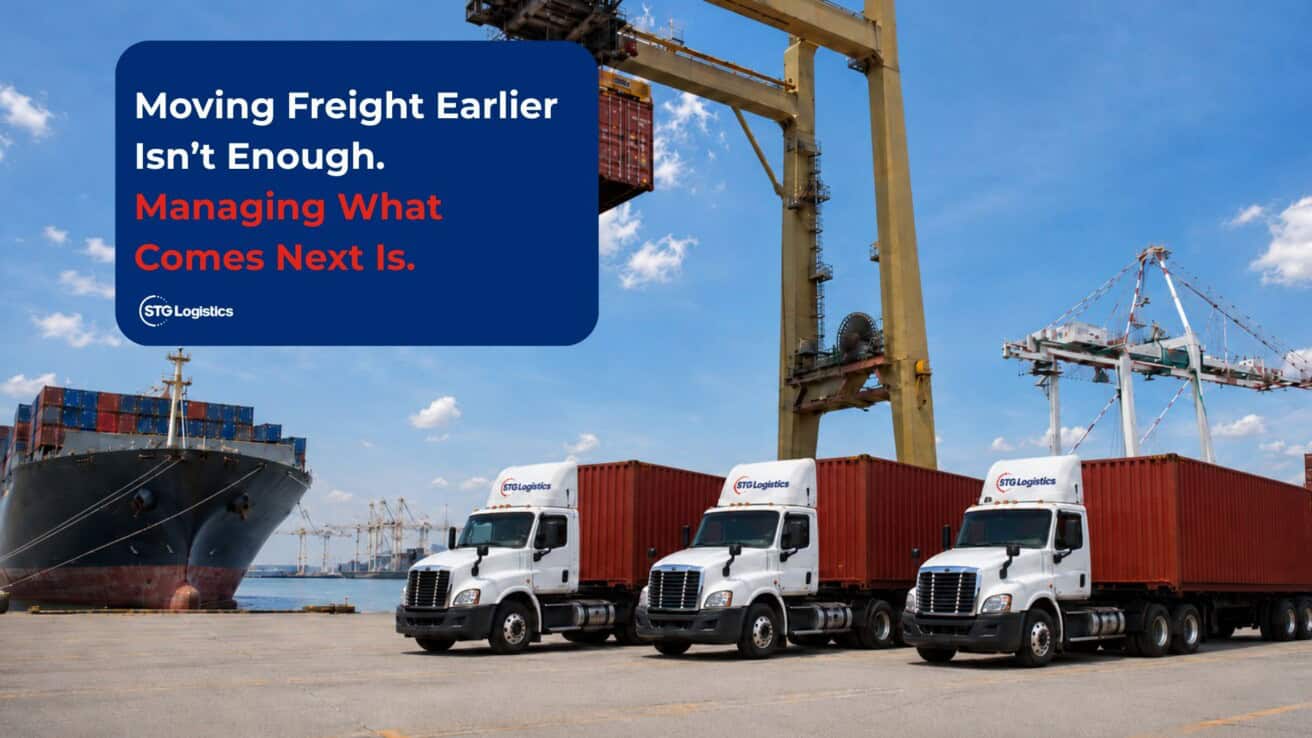
As continued tariff uncertainty, rising fuel costs and shifting trade policies continue to reshape global commerce, ocean shippers are once again pulling cargo forward to stay ahead of potential disruption.
According to recent industry reporting, retailers accelerated imports this summer in anticipation of tariff increases, driving a 14.3% year-over-year increase in June import volumes and creating an earlier-than-normal peak shipping season. Ocean booking windows have stretched from approximately two weeks to as many as five, as companies race to secure capacity before additional costs take effect.
The strategy is understandable. If tariffs are expected to increase at any time, bringing inventory in today can help protect margins.
But while much of the conversation has focused on why companies are frontloading cargo, a more important question remains:
Does frontloading actually create supply chain resilience?
To better understand how enterprise organizations responded to tariff disruption, STG Logistics surveyed 500 enterprise-level beneficial cargo owners (BCOs) and shippers, each responsible for more than $1 billion in annual import value. What we found challenges the idea that moving freight earlier is enough.
Frontloading wasn’t the strategy.
It was simply the first move.
Frontloading Helped Companies Avoid Tariffs While Creating New Challenges
Our research found that 85.6% of enterprise shippers frontloaded inventory in response to tariff uncertainty. For many organizations, the decision paid off in the short term. More than half avoided higher duties, while 44% improved product availability during peak demand periods.
Yet those gains often came with significant downstream consequences.
Forty-two percent reported increased storage costs. Forty-four percent experienced working capital strain. More than one-quarter encountered prolonged “quiet periods” while working through excess inventory, reducing replenishment flexibility and tying up capital long after the initial tariff threat had passed.
Perhaps the most surprising finding was that despite widespread adoption of frontloading, 44.8% of respondents reported an overall negative business impact. And yet, 85.6% said they would frontload again because the alternatives carried even greater risk.
That tells us something important.
Frontloading wasn’t the problem. Relying on frontloading as the entire strategy was.
Earlier Ocean Arrivals Shift Risk Inland
Every container that arrives ahead of schedule has to move somewhere.
As import volumes increase, pressure doesn’t disappear – it simply moves from the port to inland transportation networks, warehouses and distribution centers.
Storage fills faster. Inventory sits longer. Transportation plans change. Working capital becomes tied up in inventory that may not move for weeks or months.
In other words, moving cargo earlier doesn’t eliminate supply chain risk. It relocates it.
That’s why inland logistics has become just as important as ocean transportation when navigating periods of disruption.
Organizations that adapted most effectively weren’t simply moving freight faster. They built logistics networks capable of responding as market conditions evolved.
The Companies That Performed Best Preserved Optionality
One of the clearest themes from our research was that successful organizations resisted putting all of their resources behind a single tactic.
Instead, they built flexibility into every layer of the supply chain.
The highest-performing companies combined targeted frontloading with broader resilience strategies, including bonded warehouses and Foreign Trade Zones (FTZs), diversified sourcing, flexible transportation contracts, intermodal transportation and port diversification.
These strategies appear different on the surface, but they share a common objective: preserving optionality.
Rather than forcing early commitments, they gave organizations the ability to adjust as tariff policies, transportation markets and customer demand continued to change.
That flexibility proved far more valuable than trying to predict every market shift perfectly.
Resilience Begins Before the Next Disruption
The survey also highlights a broader transformation underway across global supply chains.
Nearly four out of five organizations shifted at least some sourcing away from China, expanding supplier networks into markets such as India, Vietnam and Southeast Asia. Organizations that had already established alternative supplier relationships adapted more quickly than those attempting to diversify in response to immediate disruption.
The lesson is clear: diversification isn’t something companies turn on during a crisis. It’s a capability built over time.
The same principle applies to transportation networks.
Organizations are redesigning logistics strategies to include more intermodal options, diversified ports, flexible contracts and greater visibility across their supply chains. These aren’t temporary responses to tariffs. They’re long-term investments in resilience.
What Comes Next
If tariff uncertainty and fuel volatility continue, frontloading will likely remain an important tool for importers.
But the organizations that outperform won’t simply be the ones that move cargo first.
They’ll be the ones that have built supply chains capable of adapting after the cargo arrives.
Our research found that the companies best positioned for the future are investing in diversified sourcing, contract flexibility, real-time visibility, strategic inventory management and logistics networks designed to evolve alongside changing market conditions.
The biggest takeaway isn’t that companies should frontload more.
It’s that resilience is no longer defined by how quickly freight moves across the ocean. It’s defined by how effectively organizations manage everything that happens after it reaches shore.
That’s where competitive advantage will be built.
Ready to move from reaction to resilience?
Download STG’s full research report, Built for Disruption: 2026 Shipper Strategy Playbook, to learn how 500 enterprise shippers responded to tariff disruption in 2025 — and what the most resilient supply chains are doing differently now.
From bonded storage and port diversification to intermodal, transload, visibility, and inland flexibility, STG Logistics helps shippers build supply chains that can adapt long after cargo reaches shore.