Chinese New Year 2027 Arrives Early: Is Your Supply Chain Ready?
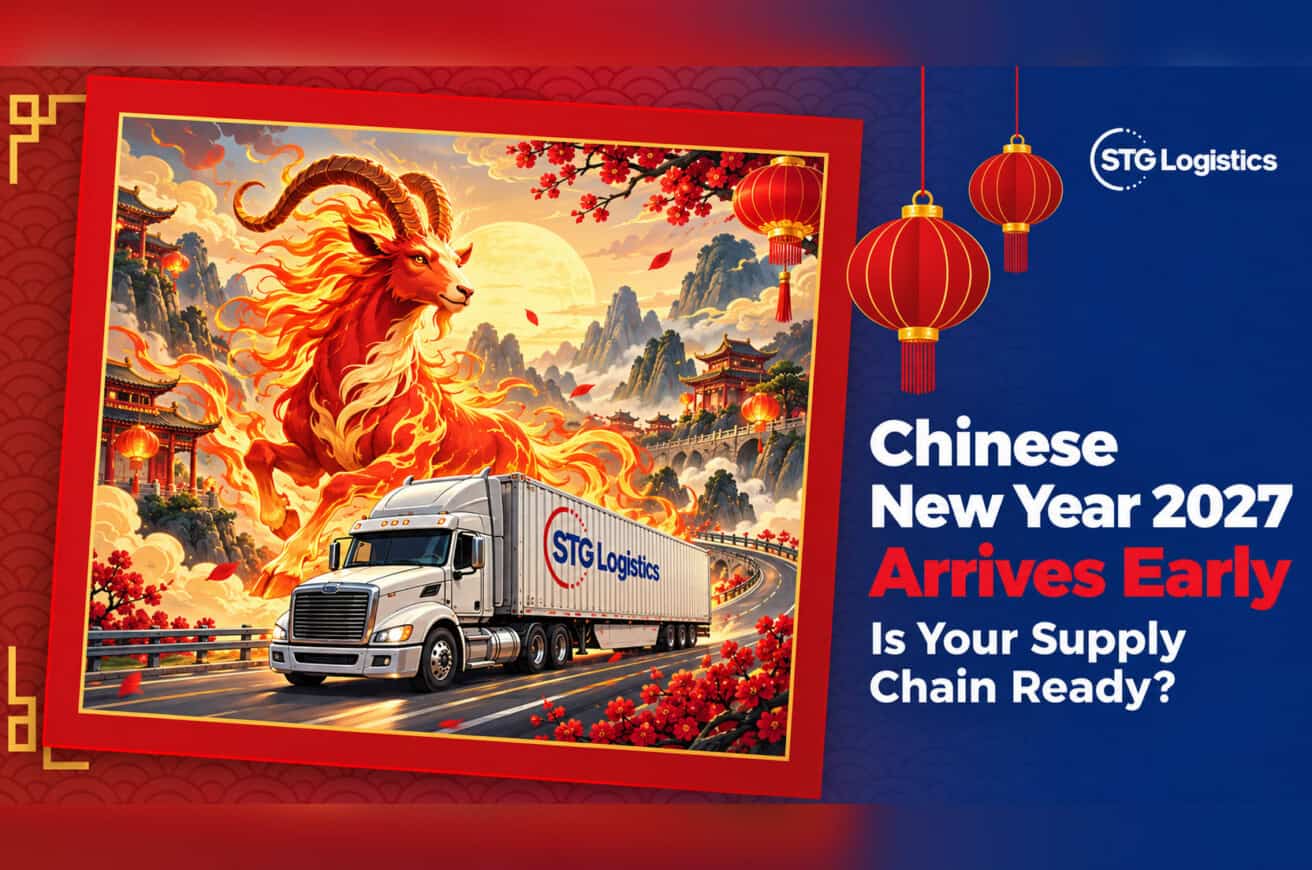
With the holiday falling 11 days earlier than last year, importers, freight forwarders and logistics providers should begin planning now to minimize disruptions and keep freight moving.
By Jane Bergos | Director of Marketing, STG Logistics
Chinese New Year may seem months away, but for companies importing goods from Asia, the planning window is already narrowing.
In 2027, Chinese New Year falls on February 6, 11 days earlier than in 2026. While the official holiday period is relatively short, its impact on global supply chains can extend for weeks before and after the celebration.
Factories across China often begin slowing production ahead of the holiday as workers travel home, while ocean carriers, freight forwarders and shippers adjust to changing cargo volumes. The result can be tighter vessel capacity, shifting sailing schedules and unpredictable cargo arrival patterns at U.S. ports.
For importers, freight forwarders and NVOCCs, successful planning requires looking beyond ocean transportation to consider how cargo will move through the entire supply chain once it reaches the United States.
Why the Earlier Holiday Matters
The earlier Chinese New Year creates a compressed planning window for manufacturers and shippers already navigating year-end production schedules, holiday demand and ongoing trade uncertainty. Companies that rely on traditional shipping timelines may find themselves competing for ocean capacity sooner than anticipated.
Potential challenges include:
- Production slowdowns: Manufacturing facilities may reduce operations or close ahead of the holiday, with production ramping up gradually afterward.
- Ocean freight capacity: Shippers may accelerate exports before factory closures, increasing demand for available vessel space.
- Changing arrival patterns: Cargo shipped ahead of the holiday can create uneven inbound volumes at U.S. ports and distribution facilities.
- Inventory pressures: Delayed replenishment or unexpected arrival patterns can complicate inventory planning and distribution schedules.
While these are familiar seasonal challenges, the earlier 2027 holiday makes proactive coordination particularly important.
Planning Does Not Stop When Cargo Leaves Asia
Much of the conversation surrounding Chinese New Year focuses on factory closures and ocean freight bookings. But what happens after containers arrive in the United States is equally important.
A successful import strategy should account for the movement of cargo from the port through CFS facilities, drayage operations, transloading centers, warehouses and inland transportation networks.
With more than 40 years of experience supporting North American supply chains, STG Logistics recognizes the importance of coordinating these services as part of a connected import strategy. For freight forwarders and NVOCCs in particular, sharing anticipated shipment volumes and arrival forecasts with CFS partners can help identify handling and transportation requirements before cargo reaches U.S. ports.
The key is to plan for what happens after the vessel arrives, not just when it departs.
1. Prepare for Shifts in CFS and LCL Volumes
For freight forwarders and NVOCCs managing less-than-container-load (LCL) shipments, changing export patterns can affect consolidation schedules and the timing of cargo arriving at U.S. container freight stations (CFS).
Planning ahead with CFS partners can help ensure cargo is efficiently received, deconsolidated and made available for pickup or further distribution. Review anticipated volumes by gateway, expected arrival dates and any special handling requirements before the holiday shipping rush begins.
2. Build Flexibility Through Transloading
Transloading can provide additional options for importers managing inbound container volumes and inland distribution requirements.
By transferring freight from international containers into domestic transportation equipment, shippers can align cargo movement with distribution needs, potentially improve equipment utilization and create flexibility across their transportation networks.
For companies evaluating inventory positioning or alternative distribution strategies, transloading should be part of the planning conversation.
3. Coordinate Drayage and Inland Transportation Early
An ocean container arriving at a U.S. port is only one step in the delivery process. Drayage capacity, appointment availability, equipment requirements and inland transportation arrangements all play a role in keeping cargo moving.
Shippers should work with logistics partners to anticipate changing arrival volumes and coordinate pickup, transloading and inland delivery requirements. Having access to multiple transportation options, including intermodal and truckload, can provide flexibility as conditions evolve.
4. Align Inventory and Warehousing Strategies
Chinese New Year planning should extend beyond February. Production and transportation schedules may take time to normalize after the holiday, making inventory visibility and warehouse capacity important considerations.
Shippers should evaluate their inventory needs, expected replenishment dates and available storage capacity to determine whether adjustments are necessary ahead of potential delays.
Your Chinese New Year 2027 Planning Checklist
With February 6 approaching, now is the time to confirm several important details with your supply chain partners.
November-December 2026
- Confirm factory shutdown and reopening schedules with suppliers.
- Review purchase orders, production deadlines and anticipated ocean bookings.
- Share expected import volumes and arrival forecasts with CFS and transportation partners.
- Evaluate drayage, transloading, warehouse and inland transportation needs.
January 2027
- Monitor vessel schedules, potential blank sailings and changes to arrival dates.
- Confirm port pickup and CFS handling arrangements.
- Review inventory requirements and potential transportation alternatives.
- Communicate changes in expected volumes or arrival patterns with logistics providers.
February-March 2027
- Monitor the pace of production and shipping recovery.
- Adjust inland transportation and distribution plans as cargo patterns evolve.
- Evaluate inventory levels and anticipated replenishment requirements.
Actual cutoff dates and disruptions will vary by supplier, origin, carrier and trade lane. Shippers should confirm schedules directly with their logistics partners.
A More Connected Approach to Supply Chain Planning
Recent research from STG Logistics reinforces the importance of maintaining flexibility across transportation and logistics networks.
In STG’s Fall 2026 survey of 500 U.S. transportation, logistics and supply chain decision-makers at companies with annual revenue of $100 million or more, 52% of respondents expect to increase the number of logistics providers they use in 2027.
The findings highlight the importance many shippers place on maintaining options as they prepare for changing market conditions.
For importers planning around Chinese New Year, that flexibility can include evaluating CFS capacity, transloading options and multiple inland transportation modes before shipment volumes begin to shift. A coordinated port-to-door strategy can help businesses respond more effectively as production schedules, vessel arrivals and distribution needs change.
Explore STG Logistics’ Fall 2026 Shipper Playbook research on stgusa.com for additional perspectives on transportation planning in 2027.
Plan Ahead with STG Logistics
With an integrated North American port-to-door network, STG Logistics helps customers coordinate the movement of freight across CFS, transloading, drayage, intermodal, trucking and warehousing services.
Whether you are managing LCL shipments, preparing for changing import volumes or evaluating inland transportation options, early conversations can help identify potential challenges and develop a plan.
Chinese New Year 2027 is arriving early. Your supply chain planning should, too.
Contact STG Logistics to discuss your 2027 import and transportation needs: https://www.stgusa.com/
About the Author
Jane Bergos is Director of Marketing at STG Logistics, where she leads industry research, market communications and thought leadership initiatives focused on North American transportation and supply chain trends. She works with STG’s commercial and operational teams to share insights that help shippers navigate evolving logistics challenges.