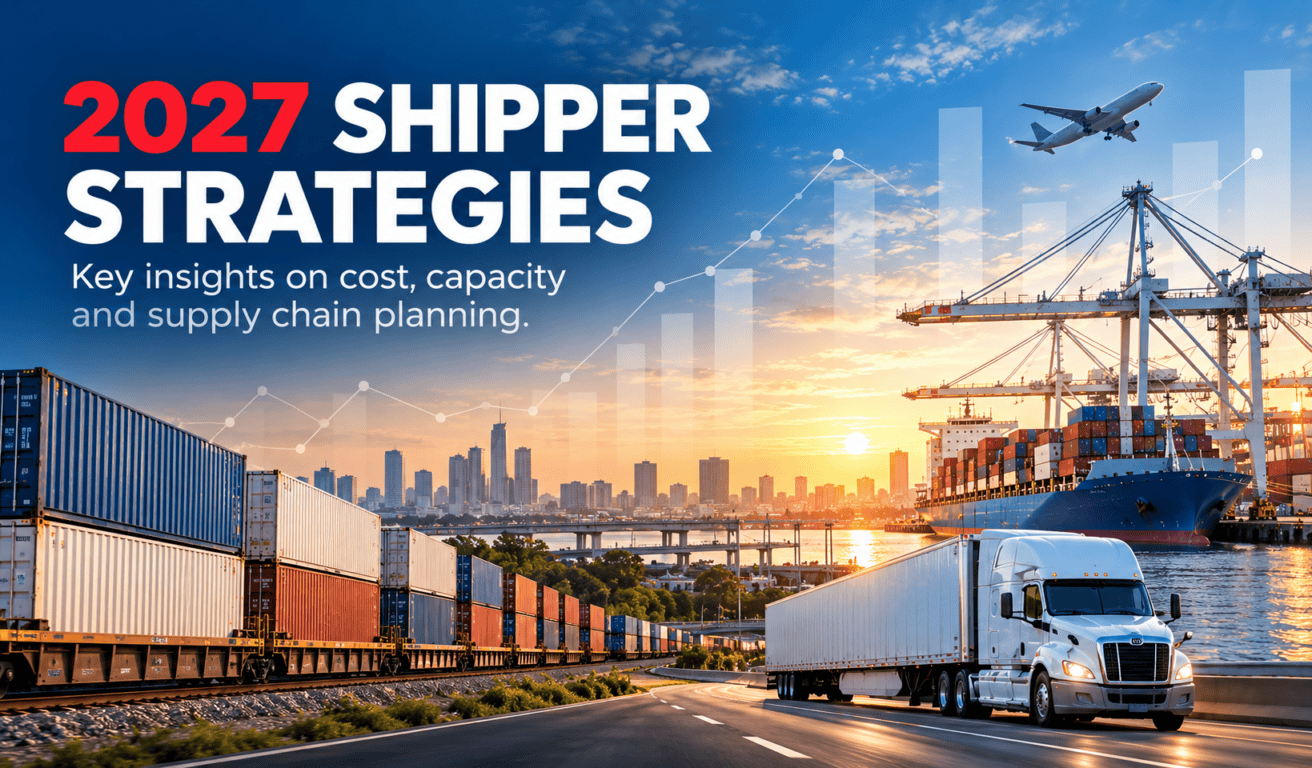
The 2027 Shipper Playbook: 5 Trends Reshaping Transportation and Supply Chain Strategies
New STG Logistics research reveals how shippers are rethinking transportation partnerships, embracing intermodal and building greater flexibility into their supply chains.
By Jane Bergos, Director of Marketing, STG Logistics
October 26, 2026
As businesses prepare for 2027, supply chain leaders face a familiar challenge: managing rising costs without compromising the service, reliability and flexibility their operations demand.
But the strategies they’re considering are evolving.
According to new research from STG Logistics, 77% of U.S. shippers expect transportation and logistics spending to increase in 2027, while many are rethinking their provider relationships, transportation modes and inventory strategies to better navigate market uncertainty.
The study surveyed 500 U.S. transportation, logistics and supply chain decision-makers at companies with annual revenue of $100 million or more.
The findings reveal an industry increasingly focused on one strategic priority: optionality—the ability to adapt as costs, capacity and market conditions change.
As Jack Holmes, CEO of STG Logistics, explained in the company’s research announcement:
“Shippers aren’t betting on a single answer for 2027. They’re keeping their options open across providers, modes, and inventory.”
Holmes also emphasized STG’s integrated port-to-door capabilities, clean and healthy balance sheet, and financial strength to continue investing in people, capabilities and service.
Here are five trends shaping transportation and supply chain strategies for 2027—and practical considerations for shippers planning for the year ahead.
1. Price Still Wins Attention, but Performance Can Win the Business
Cost remains a leading consideration when shippers award transportation business. But the research suggests that price alone may not be enough to earn and retain their business.
Nearly half of surveyed shippers say they would pay a premium for:
- Faster transit times (48%)
- Higher on-time performance (48%)
At the same time, 48% say price increases could prompt them to shift meaningful business away from an incumbent provider, while 42% say competitive pricing could lead them to award more business to an existing partner.
These findings underscore the importance of balancing cost and service performance.
A lower transportation rate does not necessarily translate into a lower overall cost if inconsistent service leads to inventory disruptions, additional handling or last-minute transportation decisions.
What this means for shippers
As you evaluate transportation providers for 2027, look beyond the initial rate. Consider total transportation costs, service consistency, transit-time predictability and the operational impact of service failures.
Ask whether your transportation partners can demonstrate reliable performance while offering alternatives when cost or service conditions change.
The takeaway: The strongest transportation partnerships deliver competitive pricing alongside measurable, dependable performance.
2. Shippers Are Rethinking Their Logistics Provider Mix
One of the study’s most notable findings is that shippers aren’t moving toward a single model for managing their transportation networks.
In fact, 52% expect to increase the number of logistics providers they use in 2027.
Yet preferences for how those relationships should be structured are almost evenly divided:
- 38% prefer fewer providers offering multiple services.
- 36% prefer working with multiple specialized providers.
This suggests the industry isn’t necessarily moving toward consolidation or fragmentation. Instead, shippers are looking for the right combination of expertise, flexibility and accountability.
Some businesses benefit from specialized partners with deep expertise in individual services or markets. Others may gain efficiencies by working with integrated providers capable of coordinating multiple parts of their supply chain.
What this means for shippers
There’s no universal formula for the ideal provider network.
When evaluating your logistics partners, consider where specialized expertise adds the most value and where an integrated provider might reduce handoffs, improve visibility and simplify execution.
Three questions worth asking:
- Do we have sufficient geographic and service coverage across our transportation network?
- Can our providers offer alternatives when capacity, pricing or service conditions change?
- Are we creating unnecessary complexity by managing too many disconnected services?
The takeaway: The best logistics network isn’t necessarily the one with the fewest providers. It’s the one that gives you the right capabilities, coverage and accountability for your business.
3. Intermodal Is Becoming a Bigger Part of the Transportation Conversation
Intermodal transportation is gaining renewed consideration as shippers look for opportunities to balance cost, capacity and performance.
According to STG’s research:
- 67% are open to shifting eligible long-haul truckload freight to intermodal.
- 63% expect their intermodal usage to increase in 2027.
- 49% require transportation savings of at least 10% to justify shifting eligible long-haul freight from truckload to intermodal.
These findings suggest more shippers are willing to reconsider traditional modal decisions and explore where rail can play a greater role in their domestic transportation networks.
However, successful intermodal programs require more than a competitive rail rate. Origin and destination drayage, equipment availability, transit expectations and network coordination all influence overall performance.
Importantly, increased interest in intermodal does not mean truckload is losing relevance. The research also found that 79% of respondents expect their truckload usage to increase in 2027.
The opportunity is to use both modes strategically.
What this means for shippers
As you review your 2027 transportation network, identify long-haul truckload lanes that may be strong candidates for intermodal conversion.
Consider three factors:
- Lane characteristics: Which lanes offer consistent volumes and predictable shipping patterns?
- Total transportation costs: What savings are achievable when rail, drayage and equipment requirements are considered together?
- Service requirements: Can intermodal meet delivery expectations while providing sufficient flexibility?
Working with a provider that offers both intermodal and truckload solutions can help shippers evaluate alternatives without adding unnecessary complexity.
The takeaway: Intermodal shouldn’t simply be viewed as an alternative to trucking. Used strategically, it can help diversify capacity, manage costs and build greater flexibility into a transportation network.
4. Warehousing and Inventory Are Part of the Resilience Equation
Transportation planning no longer happens in isolation from inventory and distribution decisions.
STG’s research points to the growing importance shippers place on inventory positioning and warehousing strategies as they prepare for continued market uncertainty.
Among respondents:
- 41% are considering adding warehouse capacity in 2027.
- 33% are considering repositioning inventory closer to customers.
For many companies, the challenge is balancing sufficient inventory to protect customer service with the costs of storage, handling and working capital.
This is especially relevant for importers navigating changing sourcing patterns, variable ocean transit times and shifts in domestic transportation capacity.
Strategically positioned warehousing, transloading and distribution capabilities can give shippers more options for managing freight once it enters the country.
For example, transloading imported goods from ocean containers into domestic transportation networks can create additional flexibility for inland distribution and inventory placement.
What this means for shippers
Revisit how inventory moves through your network—not just how freight moves between individual points.
Consider whether port diversification, transloading, strategically located warehousing or more flexible distribution arrangements could improve responsiveness.
Key questions include:
- Could additional warehouse capacity improve our ability to respond to unexpected changes in demand?
- Would positioning inventory closer to customers improve service or reduce downstream transportation costs?
- Can transloading provide more flexibility in how imported goods enter our domestic distribution network?
The takeaway: Transportation, inventory and warehousing decisions are increasingly interconnected. Planning them together can reveal opportunities that may be missed when each is managed independently.
5. Stronger Partnerships Will Matter in a Changing Freight Market
Across the research, one theme stands out: shippers are looking for ways to protect service while maintaining the flexibility to respond to changing conditions.
That puts greater importance on logistics providers that can do more than move freight from point A to point B.
As capacity, pricing and customer requirements evolve, successful relationships will depend on communication, responsiveness, operational expertise and the ability to adapt.
The research also found that fuel is the most widely cited transportation cost concern for 2027, while tariffs and trade policy are expected to significantly influence broader logistics and inventory strategies.
In this environment, the value of a logistics partner increasingly extends beyond transactional freight movements.
What this means for shippers
When evaluating logistics partners, consider questions beyond rates and service coverage:
- Can the provider offer alternatives when capacity or market conditions change?
- Do they have the operational expertise and resources to execute consistently?
- Can they support multiple transportation and logistics needs as your business evolves?
- Will they work proactively with your team to identify opportunities and solve problems?
The takeaway: The most valuable logistics partners aren’t simply vendors. They’re extensions of your supply chain team, helping you make informed decisions and navigate challenges before they become disruptions.
Looking Ahead: Building a More Flexible Supply Chain for 2027
The findings from STG Logistics’ latest research reinforce an important point: shippers aren’t relying on a single solution to navigate tomorrow’s supply chain challenges.
They’re reconsidering provider relationships, exploring modal alternatives, evaluating inventory strategies and placing greater value on dependable performance.
The challenge for 2027 isn’t necessarily finding one perfect transportation strategy. It’s building a network with enough flexibility to respond when conditions change.
At STG Logistics, we believe that flexibility starts with having the right options—and the right partner to put them to work.
With an integrated portfolio spanning CFS and transloading, drayage, intermodal, truckload, LTL and warehousing, STG helps customers connect the transportation and logistics capabilities they need across their supply chains.
Whether you’re looking to optimize a specific transportation lane, strengthen port-to-door execution or evaluate a broader network strategy, our teams are ready to help you explore what’s possible.
Planning for 2027? Contact STG Logistics to discuss your transportation and supply chain priorities.
Want a deeper look at the findings?
Download the full 2027 Shipper Playbook: Building Optionality in a Higher-Cost, Higher-Volatility Market for additional data and practical planning insights.
About the Research
STG Logistics commissioned a survey of 500 U.S. transportation, logistics and supply chain decision-makers at companies with annual revenue of $100 million or more.
The study was fielded September 4–9, 2026, using Pollfish, a third-party market research platform.
Respondents shared their expectations for 2027 transportation spending, logistics provider relationships, modal strategies, inventory decisions and broader supply chain planning priorities.
Percentages reflect unweighted survey responses and may not total 100% due to rounding or multiple-response questions.
About the Author
Jane Bergos | Director of Marketing, STG Logistics
Jane Bergos leads marketing, industry research and thought leadership initiatives at STG Logistics. She collaborates with commercial and operations leadership to translate transportation trends, market research and customer insights into practical resources for shippers.