
Intermodal Shipping Solutions: How Shippers Can Cut Costs, Reduce Emissions, and Build Supply Chain Resilience
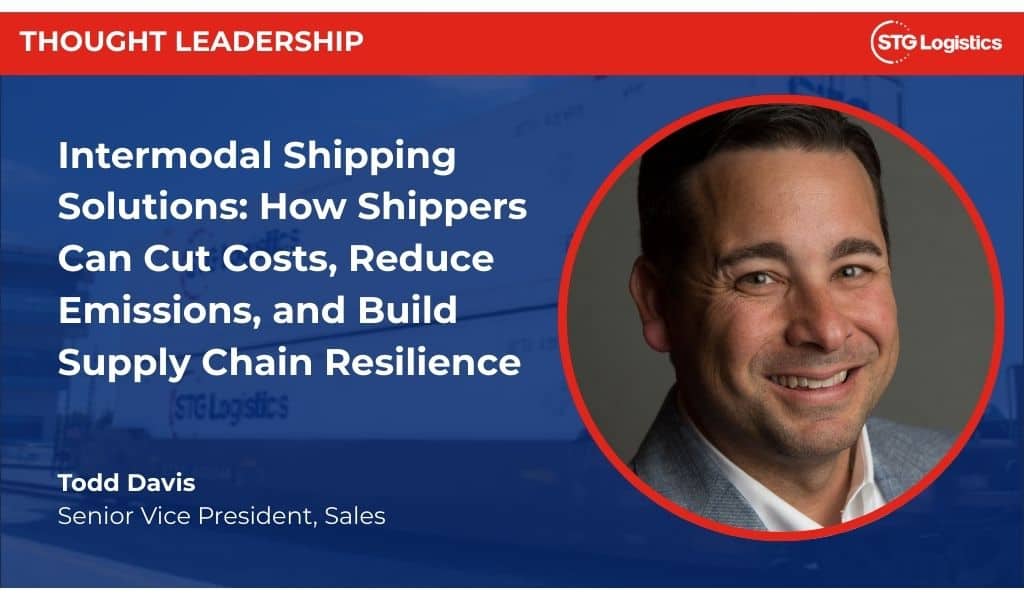
By Todd Davis, Senior Vice President, Sales at STG Logistics
Disruption as the Rule, Not the Exception
The global supply chain is no stranger to upheaval. In the past five years, macroeconomic headwinds, tariff disputes, labor actions, weather events, and shifting trade agreements have redefined what “normal” looks like. Today’s shippers must contend with constant volatility, where consumer behavior, geopolitical policies, and global port congestion can upend forecasts overnight.
In this environment, agility has become the most valuable currency. For shippers and logistics providers alike, the question isn’t whether disruption will occur — it’s how quickly and effectively they can adapt when it does.
Intermodal’s Role in Supply Chain Resilience
Intermodal freight has emerged as a powerful tool for building flexibility into complex supply chains. By leveraging rail and truck assets in tandem, shippers gain:
- Cost efficiency: Intermodal can reduce transportation expenses by replacing long-haul truckload with rail, while still maintaining competitive transit times on lanes over 750 miles.
- Sustainability benefits: Intermodal offers up to a 75% reduction in carbon emissions compared to over-the-road (OTR) trucking. This aligns with corporate ESG goals and growing consumer demand for greener supply chains.
- Risk diversification: By adding modal options, shippers mitigate exposure to capacity shortages, driver supply constraints, and highway congestion.
- Steady capacity: With railroads investing billions in infrastructure, intermodal networks are better positioned to absorb volume surges and maintain reliability.
Current Trends Reshaping the Market
1. Sustainability Pressure
Corporate carbon commitments are accelerating intermodal adoption. Manufacturers and retailers are increasingly converting OTR lanes into intermodal to reduce emissions without compromising service. For example, distribution center transfers or vendor-to-DC freight can shift seamlessly, yielding both cost and carbon savings.
2. Transloading at Key Gateways
Rather than relying solely on inland point intermodal (IPI) solutions, shippers are embracing transload strategies. Consolidating multiple international containers into fewer domestic containers reduces equipment needs by 20–33% and lowers drayage, fuel, and chassis costs. This also provides flexibility during equipment shortages or when sailing schedules shift.
3. Technology and Innovation
Artificial intelligence, data analytics, and cargo visibility platforms are transforming intermodal efficiency. From route optimization to AI-driven cargo dimensioning and cybersecurity applications, technology is helping providers minimize empty miles, improve security, and create greener haul opportunities.
Navigating Trade Dynamics in Real Time
Shippers today face a delicate balancing act: managing costs while protecting customer loyalty. Ordering too early can increase inventory carrying costs, while under-ordering risks missed sales and frustrated customers. For example, trimming SKUs in seasonal categories may simplify logistics, but it risks alienating consumers — a mistake that can echo across future buying decisions.
Intermodal provides a buffer against these swings. With flexible equipment positioning, strategic partnerships, and scalable labor, shippers can fine-tune supply chain strategies in real time, adapting to import surges, tariff shifts, or weather-driven delays. In addition, intermodal can notably reduce transportation costs by shifting long-haul segments to rail, moving freight while saving on fuel and consolidating containerized loads. This leads to streamlining handling and labor expenses – efficiencies that drive savings.
Looking Ahead: The Next Chapter in Intermodal
The intermodal market is positioned for continued growth in the coming years:
- Railroad investment in new terminals, cranes, and digital tools will strengthen velocity and reliability.
- Industry consolidation and collaboration — such as recent Class I mergers — will enhance east-west connectivity and reduce chokepoints at inland hubs like Chicago.
- Green initiatives will continue to drive conversion from OTR, with intermodal providers offering programs like “green haul” to reduce empty miles and carbon output.
For supply chain leaders, the next frontier isn’t about eliminating disruption — it’s about transforming disruption into competitive advantage. Intermodal is becoming the backbone of that strategy.
Conclusion & Call to Action
In a world where disruption is the new normal, intermodal isn’t just a fallback plan — it’s a strategic enabler. By combining scale, technology, and operational agility, providers can help shippers weather volatility while advancing cost and sustainability goals.
At STG Logistics, we’ve built one of the industry’s most comprehensive port-to-door solutions, integrating drayage, transloading, and final-mile services. With 15,000 domestic 53’ containers and deep expertise in intermodal strategy, we’re helping shippers reduce costs, streamline receiving, and position inventory where it matters most.
Learn more about how STG Logistics can help your business turn disruption into opportunity.
FAQs
1. Why is disruption considered the “new normal” in today’s supply chain?
Global supply chains now face continual instability—ranging from macroeconomic shifts and tariffs to labor actions and extreme weather. Agility has become essential, as even minor changes in consumer behavior or port congestion can derail forecasts almost overnight.
2. How does intermodal shipping offer cost efficiency compared to long-haul trucking?
Intermodal transportation (combining rail and truck) can reduce transportation costs by approximately 10%–30% on long-haul routes—particularly over 1,200 miles—thanks to rail’s fuel efficiency, economies of scale, and competitive all-in contract rates SONAR.
3. What are the sustainability benefits of intermodal freight? Rail produces substantially lower emissions: studies estimate up to 75% reduction in greenhouse gas emissions versus trucking Freight Rail & Intermodal | AAR
4. How does transloading at key gateways help reduce costs and improve flexibility?
Transloading can reduce inland transportation costs by approximately 30%, largely due to load unit consolidation—transferring contents from multiple maritime containers into fewer, larger domestic containers for efficient rail or truck shipment. Port Economics
5. What role does intermodal play in mitigating supply chain risk?
By diversifying modes and adding rail alternatives, intermodal reduces dependency on long-haul trucking, buffers against driver shortages, and lessens highway congestion exposure. Ongoing rail infrastructure investments further enhance reliability.
6. How can shippers transform disruption into competitive advantage with intermodal?
With scalable intermodal networks, shippers can adapt quickly to import surges, tariff shifts, or weather delays—fine-tuning logistics strategies to control costs, guard customer loyalty, and sustain operations through volatility. Intermodal thus becomes a strategic enabler rather than just a fallback plan.


