Intermodal's Next Chapter: Why Shippers Are Returning to Rail in a New Freight Economy
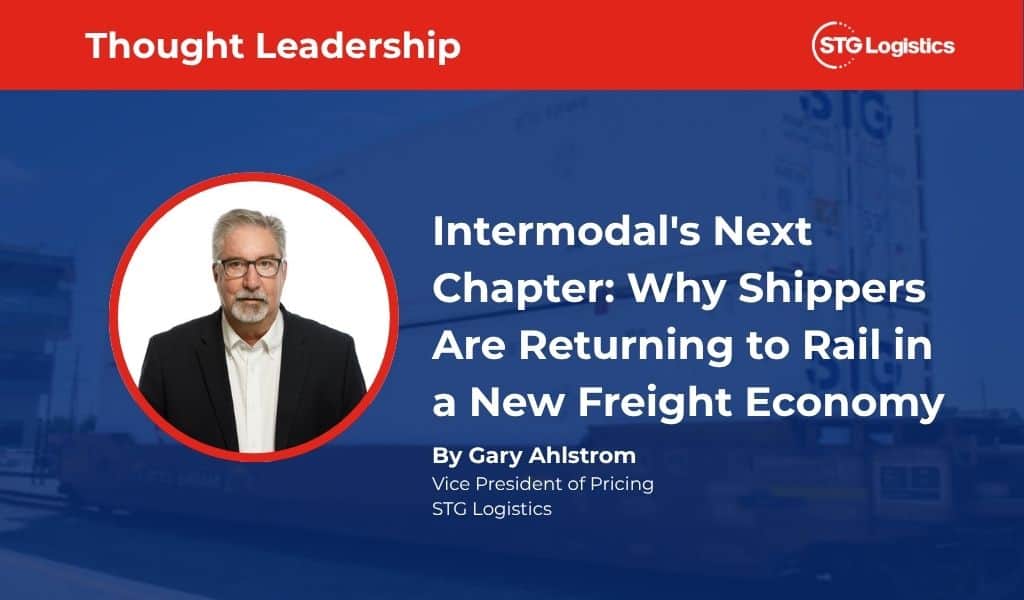
By Gary Ahlstrom, Vice President, Pricing
For most of the past three years, intermodal transportation faced an uphill battle.
Following the supply chain disruptions of the pandemic, truckload rates remained surprisingly competitive, narrowing the traditional cost advantages that had long made intermodal an attractive option for shippers. Many organizations continued to prioritize flexibility and speed, even as transportation networks adjusted to a new reality.
Today, that equation is changing.
As fuel costs rise, long-haul driver availability tightens, and supply chain volatility persists, shippers are once again looking at intermodal transportation as a strategic advantage—not simply as a cost-saving measure, but as a way to build resilience into their freight networks.
The result is a renewed shift toward rail that could reshape how freight moves across North America in the years ahead.
Cost Is Driving the Conversation
While sustainability initiatives, network optimization, and risk mitigation all play a role in transportation decisions, the primary driver behind today’s intermodal growth is straightforward: economics.
Fuel prices remain elevated compared to recent years, and the trucking industry continues to face persistent challenges attracting and retaining long-haul drivers. Together, those factors are making rail a more attractive option for many shippers.
What’s notable is that this renewed interest is occurring across a diverse range of industries. E-commerce companies, retailers, automotive manufacturers, home improvement chains, appliance producers, and consumer goods brands are all evaluating opportunities to convert freight from truckload to intermodal.
The strongest candidates tend to share similar characteristics: long-haul freight, consistent shipping patterns, palletized products, and origin and destination points that are well-served by rail infrastructure.
For these shipments, intermodal is increasingly delivering the combination that supply chain leaders are seeking: lower costs without sacrificing reliability.
Reliability Is No Longer the Question Mark
Historically, one of the biggest concerns surrounding intermodal transportation was service consistency.
That concern is becoming increasingly outdated.
Over the last several years, railroads have invested heavily in infrastructure, network improvements, and service enhancements. Projects such as CSX’s Howard Street Tunnel expansion have increased efficiency across Eastern rail corridors and enabled new routes, while the Union Pacific has introduced faster premium train services on key routes.
As freight demand begins to rebound, many rail networks are entering this growth cycle with stronger infrastructure and improved operational performance than they had prior to the pandemic. Across key lanes, service levels today are among the most consistent the industry has seen in years.
For shippers that previously viewed rail as a compromise between cost and service, that perception may need to be reconsidered.
Building Resilience in an Uncertain Market
Recent years have offered a master class in supply chain disruption.
Tariffs, labor shortages, port congestion, geopolitical uncertainty, and shifting consumer demand have forced organizations to rethink how they move goods.
One lesson has become increasingly clear: capacity matters.
While trucking capacity is heavily dependent on driver availability, intermodal networks leverage the efficiency of rail to move freight at scale. A single train can transport the equivalent of hundreds of truckloads, significantly reducing reliance on long-haul drivers while preserving transportation capacity during periods of market stress.
That advantage becomes particularly valuable during demand spikes or unexpected disruptions.
As companies continue to evaluate supply chain resilience strategies, intermodal offers a practical way to diversify transportation options and reduce exposure to capacity constraints.
Sustainability Remains a Meaningful Advantage
One of the more interesting realities in today’s market is that environmental initiatives are rarely the primary reason companies are converting freight to rail.
Cost is winning the conversation.
Sustainability remains an important secondary benefit.
Intermodal transportation can reduce carbon emissions substantially compared to over-the-road trucking, making it an attractive option for organizations with environmental reporting requirements or corporate sustainability goals.
This is particularly true among multinational organizations and European-based companies, where ESG commitments continue to play a significant role in transportation decision-making.
In many cases, the business case and sustainability case are increasingly aligned: reducing emissions and reducing transportation spend can happen simultaneously.
Security Is Becoming a Competitive Differentiator
Another emerging area of focus is cargo security.
As freight theft and cargo tampering continue to challenge supply chains, rail providers have implemented new programs designed to better protect high-value shipments.
Enhanced monitoring, improved facility security, and specialized railcar placement programs are helping reduce exposure to theft and cargo interference. These investments reflect a broader industry effort to strengthen trust and reliability throughout the transportation network.
For shippers moving high-value products, security is becoming an increasingly important factor alongside cost, service, and sustainability.
Looking Ahead
The future of intermodal transportation will be shaped by several forces.
Potential railroad consolidation could significantly alter the North American transportation landscape, driving all railroads to improve service. Continued investments in infrastructure and network optimization will likely improve service levels further. And perhaps most importantly, the long-term challenge of driver availability is unlikely to disappear.
Taken together, these trends point toward sustained growth for intermodal transportation.
After years of uncertainty, the industry appears to be entering a new phase – one where rail is no longer viewed solely as an alternative to trucking, but as a foundational component of modern supply chain strategy.
For shippers navigating an increasingly complex freight environment, that shift may prove to be one of the most important transportation stories of the decade.
Ready to see if intermodal makes sense for your freight network?
STG Logistics can help you evaluate your transportation spend, identify conversion opportunities, and develop an intermodal strategy tailored to your business. Our team combines deep market expertise with a nationwide network to help shippers improve efficiency, increase resilience, and unlock long-term savings.
Connect with an STG Logistics transportation expert today and start building a smarter, more flexible supply chain.