Transloading in 2026: Building Smarter, More Resilient Supply Chains
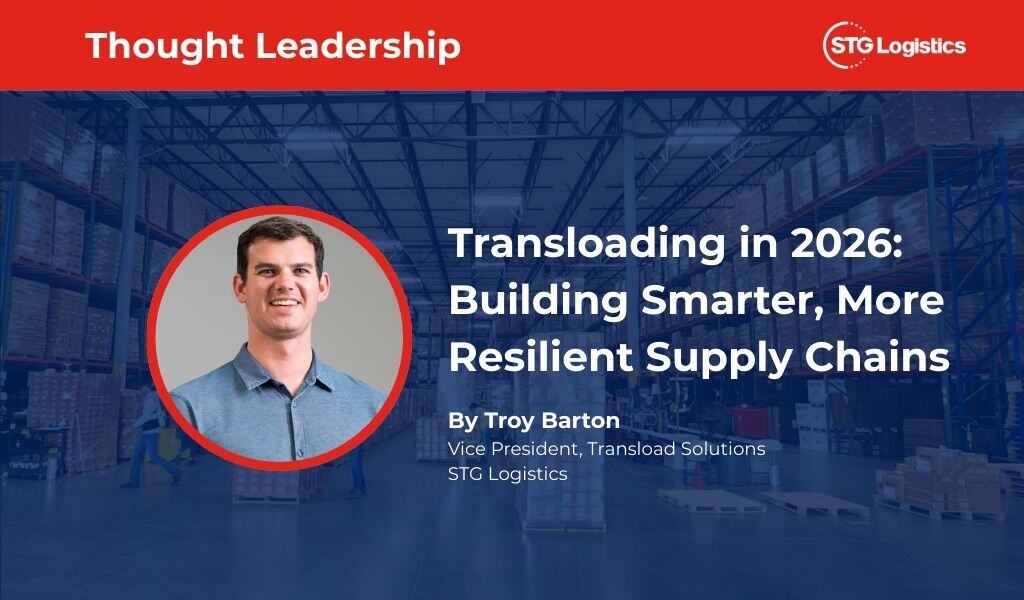
By Troy Barton, VP Transload
As global supply chains continue to evolve, the ability to move freight efficiently between transportation modes—known as transloading—has become a competitive advantage rather than just a logistics function. In 2026, transloading plays a central role in helping businesses move faster, adapt quicker, and operate more cost-effectively in an increasingly complex transportation environment.
By optimizing how freight flows between ports, rail, and road, transloading reduces congestion, shortens transit times, and gives shippers the flexibility they need to meet customer expectations without inflating costs.
As a leading U.S. provider of container transloading services, STG Logistics leverages advanced technology, a nationwide footprint, and deep operational expertise to deliver seamless port-to-door solutions. With strategically located CFS facilities we go beyond traditional transloading to provide customized logistics strategies designed around your business.
Transloading vs. Cross-Docking: Understanding the Difference
Transloading and cross-docking are both essential tools for modern logistics, but they serve distinct purposes.
Cross-docking focuses on speed—freight moves quickly from inbound to outbound transportation with little to no storage time.
Transloading, on the other hand, involves transferring freight between different transportation modes and may include unpacking, repackaging, palletizing, consolidating, or storing goods. This added flexibility makes transloading especially valuable for:
- Fluctuating shipment volumes
- Import-heavy supply chains
- Freight requiring staging or extended storage
- Mode optimization between ocean, rail, and truck
With STG Logistics as a single point of contact, customers benefit from coast-to-coast transloading capabilities, customs-bonded facilities, and proven experience handling specialized and high-volume cargo.
Why Transloading Matters More Than Ever
Supply Chain Resilience
In today’s disruption-prone environment, transloading facilities act as strategic buffer zones. They allow freight to be stored, rerouted, consolidated, or redirected as conditions change. STG Logistics supports domestic and international shipments, multimodal transportation, and customized distribution solutions that keep freight moving—even when plans shift.
Efficiency and Cost Control
By consolidating freight into optimized loads, transloading reduces fuel consumption, improves routing efficiency, and lowers transportation costs. STG Logistics’ multi-door facilities handle devanning, sorting, palletizing, and distribution in-house—reducing touchpoints, delays, and overall spend.
Technology-Driven Visibility
Modern transloading depends on real-time data. STG Logistics’ customer portal delivers end-to-end visibility, including shipment status, tracking updates, and milestone reporting. Advanced automation and facility technology improve safety, accuracy, and productivity at every stage of the process.
Transloading Trends Shaping 2026
- Sustainable Logistics: Increased use of intermodal and optimized freight consolidation to reduce carbon emissions.
- E-Commerce Growth: Rising demand for faster, more flexible fulfillment and smaller shipment profiles.
- Cross-Border Expansion: Strong growth in Mexico–U.S. trade, driving demand for bonded facilities and cross-border transloading expertise.
STG Logistics is positioned at the center of these trends, offering the scale, infrastructure, and compliance expertise needed to support them.
The Building Blocks of Effective Transloading
Strategic Facility Placement
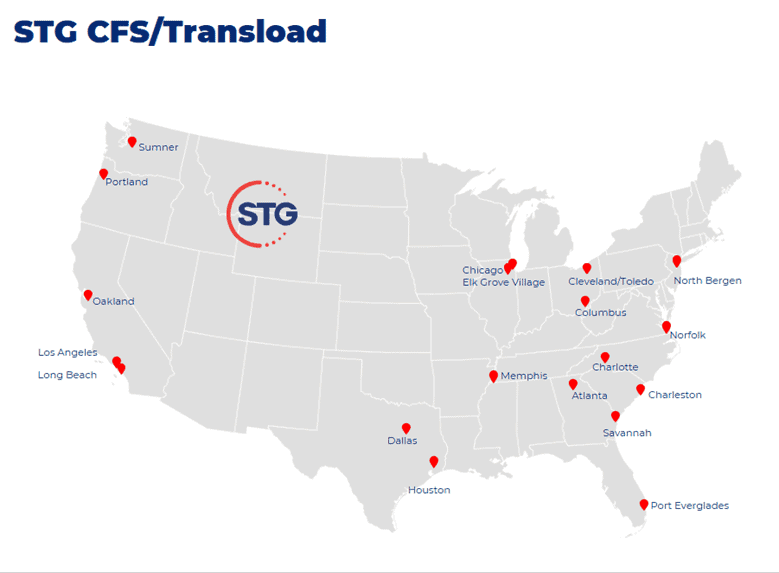
STG Logistics operates 19 warehouses near major U.S. ports, forming the nation’s largest network of customs-bonded facilities with immediate port access. This proximity accelerates freight movement and minimizes dwell time.
Advanced Systems and Technology
Integrated TMS and WMS platforms improve coordination, communication, and decision-making across the supply chain—ensuring freight moves smarter, not harder.
Safety, Security, and ESG Commitment
From driver safety to cargo security, STG Logistics maintains rigorous operational standards. Our ESG-focused approach emphasizes safe operations, inclusive workplaces, and consistent performance customers can trust.
Overcoming Transloading Challenges
Transloading comes with complexities—from customs compliance and hazmat regulations to data integration and connectivity. STG Logistics addresses these challenges through:
- Customs-bonded warehousing that defers duties and streamlines clearance
- Trained teams and strict protocols for hazardous materials handling
- Integrated data systems that connect transportation providers, warehouses, and regulatory authorities
Our CFS and CLS operations are designed to simplify complexity while maintaining speed and compliance.
Partner with STG Logistics
With 19 CFS/Transload facilities nationwide and a strong presence in key markets like Southern California, New York, and Florida, STG Logistics delivers the coverage, capacity, and agility today’s supply chains demand.
From container transloading and drayage to intermodal shipping, LTL trucking, and end-to-end logistics support, we’re ready to help you move forward.
Connect with STG Logistics today to learn how our transloading solutions can strengthen your supply chain in 2026 and beyond.