Capacity, Cost, and Mode Volatility: Why Supply Chains Need More Optionality
The freight market is still uneven.
Some lanes continue to face soft demand, while others are seeing renewed capacity pressure, rising truckload costs, fuel volatility, and growing interest in intermodal transportation. For shippers, this creates a complicated planning environment. The lowest-cost mode today may not be the best option tomorrow. A lane that feels stable one month may tighten the next. A network built around a single mode or provider can quickly become difficult to manage when conditions shift.
For freight forwarders and 3PLs, that volatility creates a clear mandate: customers need optionality.
They need partners who can help them pivot between ocean, drayage, transload, intermodal, truckload, LTL, and warehousing based on cost, capacity, service requirements, and market conditions. They also need visibility and execution support across the full freight journey, not just a single leg.
That is where a flexible, integrated managed logistics partner can make a meaningful difference.
The Market Is Moving, But Not Evenly
After several years of freight market disruption, the transportation landscape remains mixed. Some parts of the market continue to show soft demand, while others are beginning to feel more capacity pressure. Truckload costs are rising in certain markets, fuel remains volatile, and shippers are once again evaluating the role of rail and intermodal as part of a more balanced transportation strategy.
This does not mean every shipment should move by rail. It does mean shippers are asking more questions.
Can this lane convert from truckload to intermodal?
Should freight be transloaded closer to the port?
Is there a lower-cost inland routing option?
Can inventory be staged differently to reduce urgency and avoid premium transportation?
Do we have enough flexibility if capacity tightens?
For forwarders and 3PLs, these questions are becoming part of the everyday customer conversation.
Why Mode Flexibility Matters Now
When market conditions are stable, shippers can often rely on predictable routing guides and established carrier strategies. But when capacity, fuel, and rates fluctuate, rigid networks become risky.
Customers need the ability to shift between modes without losing control of service. In some cases, that may mean converting long-haul truckload moves to intermodal. In others, it may mean using transload to create inland optionality, shifting between LTL and truckload based on shipment size, or adding warehousing to reduce time-sensitive transportation needs.
The strongest 3PLs and forwarders are those that can help customers evaluate these options before costs spike or service disruptions occur.
That requires more than access to capacity. It requires network visibility, transportation planning, mode expertise, and execution across multiple service lines.
Intermodal Is Back in the Conversation
As truckload costs rise and shippers look for ways to manage transportation spend, intermodal is gaining renewed attention. For the right freight, rail can offer a powerful combination of cost savings, capacity, and sustainability benefits, especially on longer-haul lanes where transit time requirements allow for greater flexibility.
STG Logistics’ recent thought leadership blog, Intermodal’s Next Chapter: Why Shippers Are Returning to Rail in a New Freight Economy, highlights why shippers are taking a fresh look at rail. The article notes that intermodal is no longer being viewed only as a cost-saving alternative. It is increasingly part of a broader strategy to build resilience, manage capacity risk, and create a more balanced freight network.
For forwarders and 3PLs, this is an opportunity to help customers reassess lanes, identify conversion opportunities, and build intermodal into the network where it makes sense.
What Forwarders and 3PLs Can Do Now
Capacity, cost, and mode volatility are not problems that can be solved with a single mode or a single carrier strategy. Customers need a flexible playbook. Forwarders and 3PLs can help by focusing on several practical actions.
1. Identify Intermodal Conversion Opportunities
Not every lane is a fit for rail, but many shippers have truckload freight that could be evaluated for intermodal conversion. Forwarders and 3PLs can help customers review lane length, transit requirements, volume consistency, destination markets, and cost targets to determine where intermodal may reduce cost pressure without compromising service.
Working with a partner like STG Logistics gives 3PLs and forwarders access to asset-based intermodal capabilities, Class I rail relationships, and a national network that can help evaluate and execute conversion opportunities.
2. Build More Flexible Routing Strategies
A network built around one primary mode can create risk when market conditions change. Forwarders and 3PLs can help customers develop routing strategies that include multiple options across drayage, transload, intermodal, truckload, LTL, and warehousing.
This flexibility allows shippers to adjust based on cost, urgency, capacity, and service requirements. It also gives customers more confidence when demand patterns shift or when a specific lane becomes constrained.
3. Use Transload to Create Inland Optionality
Transloading can help customers convert international containers into domestic transportation options, improve trailer utilization, consolidate or deconsolidate freight, and move product closer to demand. It can also create more flexibility when port, rail, or truckload conditions shift.
With STG’s CFS and transloading capabilities, forwarders and 3PLs can help customers move freight from port to inland markets more efficiently while maintaining options across intermodal, truckload, LTL, and warehousing.
4. Add Warehousing to Reduce Transportation Pressure
Warehousing is not just a storage solution. In a volatile market, it can be a transportation strategy.
By staging inventory closer to demand, customers can reduce reliance on urgent, high-cost transportation. Warehousing can also help smooth out seasonal surges, manage uneven freight flows, and create more time to make cost-effective routing decisions.
STG’s warehousing and contract logistics capabilities help partners support customers that need storage, fulfillment, inventory management, and flexible distribution options as market conditions change.
5. Strengthen Visibility and Exception Management
When freight moves across multiple modes, visibility becomes essential. Customers need to know where freight is, when it will be available, and what decisions need to be made if something changes.
Forwarders and 3PLs can deliver more value by providing clear communication, milestone visibility, exception management, and proactive recommendations. STG’s technology and managed logistics capabilities help partners coordinate across complex transportation networks and keep customers informed from port to door.
6. Move From Transactional Freight to Managed Logistics
The biggest opportunity for forwarders and 3PLs is to move from one-off shipment execution to more strategic network management.
Customers are not just asking, “Can you move this load?” They are asking, “What is the smartest way to move this freight right now?”
Managed logistics helps answer that question. By combining transportation planning, carrier coordination, visibility, mode optimization, and execution support, STG helps partners build solutions that adapt to market conditions instead of reacting to them after costs rise or service is disrupted.
Why a Partner Like STG Matters
Forwarders and 3PLs do not need to build every capability themselves to offer customers a more flexible solution. They need the right partner.
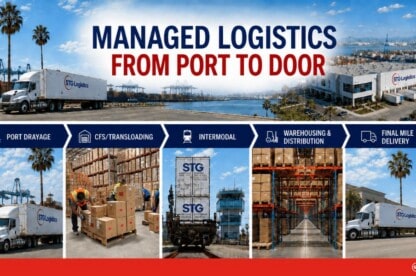
STG Logistics provides integrated port-to-door capabilities across CFS, transloading, drayage, intermodal, warehousing, LTL, over-the-road, and managed logistics services. That breadth gives forwarders and 3PLs the ability to support customers across multiple modes, markets, and scenarios.
When truckload costs rise, STG can help evaluate intermodal opportunities.
When port flows shift, STG can support drayage, CFS, and transload execution.
When inventory needs to be staged closer to demand, STG can provide warehousing and distribution support.
When customers need a broader transportation strategy, STG’s managed logistics solutions can help coordinate the moving parts.
In a market defined by volatility, that kind of optionality matters.
Build a Freight Strategy That Can Pivot
Capacity, cost, and mode volatility are not going away. Shippers need logistics partners who can help them make smarter decisions, control transportation costs, and keep freight moving when market conditions change.
For forwarders and 3PLs, this is the moment to become more than a freight provider. It is an opportunity to help customers evaluate mode options, optimize routing, improve visibility, and build more resilient transportation networks.
STG Logistics helps partners deliver those solutions through a national port-to-door network that includes CFS, transloading, drayage, intermodal, warehousing, LTL, truckload, and managed logistics services.
When the market shifts, your customers need more than capacity. They need options, visibility, and a partner who can help them move with confidence.