
Cross-Border Intermodal: Winning the Long Game in Mexico–U.S. Logistics
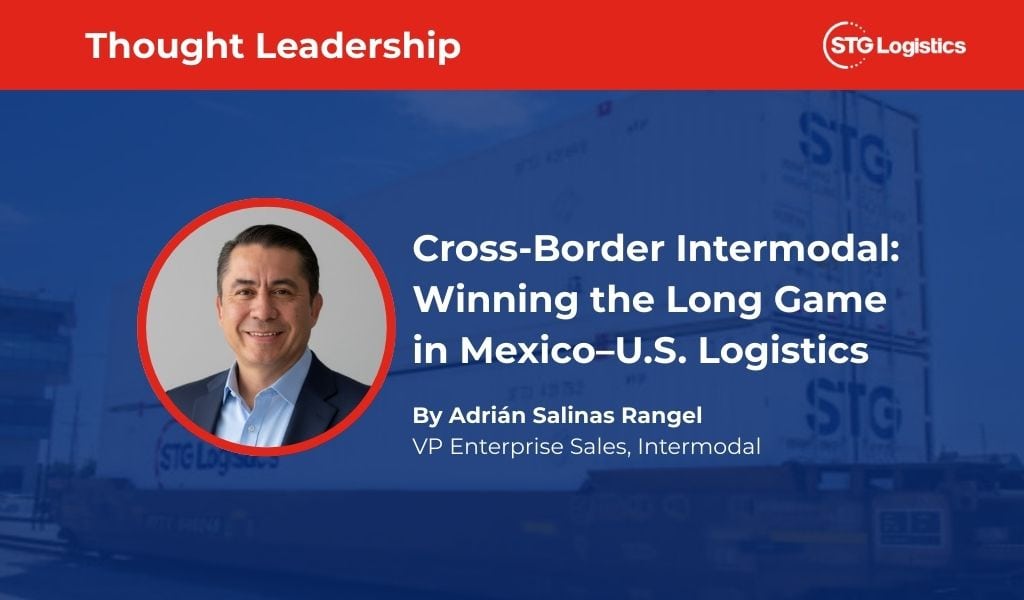
Insights from Adrián Salinas, Enterprise Sales – Mexico, STG Logistics
As nearshoring accelerates and cross-border freight volumes continue to climb, shippers moving cargo between Mexico, the U.S., and Canada are under more pressure than ever to make the right logistics decisions. Tariffs, border congestion, security risks, and capacity constraints aren’t hypothetical challenges—they’re daily realities.
We sat down with Adrián Salinas, Enterprise Sales – Mexico at STG Logistics, to unpack what shippers learned in 2025 and how intermodal is reshaping the future of cross-border supply chains.
The Biggest Lesson of 2025: Play the Long Game
According to Salinas, the shippers who came out ahead in 2025 weren’t the ones waiting on perfect clarity—they were the ones who kept freight moving while planning strategically.
“The real winners were the clients who took a hybrid approach,” Salinas explains. “They continued importing, built inventory buffers, and didn’t freeze while waiting for tariff certainty.”
Despite the noise surrounding potential tariff changes, the USMCA (T-MEC) provided stability for most industries. Automotive, in particular, held strong—though rising steel and aluminum costs did create upward pressure on parts pricing.
The takeaway? Agility beats hesitation.
Common Cross-Border Mistakes—and Why Old Routes Are Costing You
Cross-border freight is complex, expensive, and unforgiving when handled incorrectly. One of the most common missteps Salinas sees is shippers defaulting to “business as usual.”
“The biggest risk right now is sticking to the same old routes,” he says. “The Laredo border has become a massive bottleneck, and those wait times are literally burning cash.”
Why Intermodal Is the MVP
Intermodal has already proven itself in the automotive sector—and it’s a blueprint others should follow. With the right equipment, expertise, and cross-border coordination, intermodal helps shippers:
- Reduce costs
- Avoid highway congestion and theft
- Maintain consistent capacity
- Minimize transit volatility
For shippers working with an experienced, asset-based provider, intermodal isn’t an alternative—it’s a competitive advantage.
Nearshoring’s Biggest Challenge: Awareness
While nearshoring dominates headlines, intermodal hasn’t fully captured its share of the opportunity. The problem isn’t performance—it’s perception.
“There’s a massive awareness gap,” Salinas notes. “Shippers don’t always understand what intermodal can really deliver.”
Bridging that gap requires education, collaboration with industry associations like AMTI and ANIERM, and stronger support from the Mexican government to elevate intermodal as a mainstream solution.
Visibility Isn’t Optional—It’s Everything
Today’s shippers demand transparency, and rightly so.
At STG Logistics, visibility is built into every move:
- Constant electronic status updates
- Systems fully synchronized with partners
- Daily tracking that supports customs coordination
- A dedicated customer service team that actually answers the phone
The result? High-tech tracking with a human touch.
Security: More Than a Checkbox
Cargo theft remains a top concern in cross-border logistics, and Salinas is clear—security must be proactive.
- STG Logistics is CTPAT compliant
- Partners across North America meet the same strict standards
- Collaboration with rail leaders like Union Pacific and Ferromex
- Non-stop operational flow to reduce risk
- High-security seals on key routes
“Our philosophy is simple,” Salinas says. “Keep the wheels turning. Fewer stops mean fewer risks.”
Solving Capacity Constraints by Owning the Gear
Capacity challenges often come down to one thing: who controls the equipment.
STG Logistics does.
- Asset-owned containers
- STG-owned chassis at every rail ramp
- No dependence on railroad equipment availability
This control gives shippers flexibility, predictability, and protection from last-minute surcharges.
“We’re not just a provider,” Salinas adds. “We’re the backbone of our customers’ shipping plans.”
Customs Compliance: Where Costs Add Up Fast
Customs mistakes can cost shippers thousands—and they’re more common than many realize. From poor dispatch timing to delayed releases at rail ramps, small errors snowball quickly.
STG works closely with shippers and customs agents to:
- Optimize dispatch and release timing
- Reduce detention and storage fees
- Eliminate border delays
The result is a leaner, more predictable supply chain—and fewer expensive surprises.
Why Intermodal Beats Trucking for Mexico–U.S. Freight
With cargo volumes surging, highway infrastructure simply can’t keep up. The consequences are clear:
- Increased congestion
- Deteriorating road conditions
- Higher accident and theft rates
Intermodal, on the other hand, continues to thrive thanks to major rail investments by Union Pacific and Ferromex. It’s also a clear ESG win, producing roughly one-third of the CO₂ emissions compared to trucking.
Safer. Smarter. Greener.
The Power of Local Expertise in Mexico
Cross-border success isn’t just about miles and modes—it’s about understanding the market.
STG’s Mexico-based team brings:
- Cultural fluency
- Local vendor insight
- Knowledge of traffic restrictions and regional nuances
That local expertise ensures seamless execution from door to destination—and better outcomes for shippers.
Real Results: A Cross-Border Intermodal Success Story
Not all intermodal routes are created equal—and one STG client learned that the hard way.
The challenge:
A shipper moving freight from New Jersey to Querétaro was stuck on the Laredo–San Luis Potosí route, dealing with long transit times, poor visibility, and constant extra fees.
The STG solution:
- Shifted the border crossing to Eagle Pass
- Changed the destination ramp to Silao
- Coordinated directly with the customs agent for faster releases
The result:
Lower transit times. Reduced costs. Fewer fees. And renewed confidence in intermodal.
The Question Shippers Aren’t Asking—but Should Be
How is STG closing the gap between trucking and intermodal in the Mexico–U.S. corridor?
According to Salinas, the answer is efficiency and education.
By making intermodal a core strategy—not a backup—shippers unlock:
- Reliable service consistency
- Significant cost savings
- Lower carbon emissions
- Total visibility
- Guaranteed capacity
- Reduced risk from highway theft and accidents
“At STG, we don’t just move cargo,” Salinas concludes. “We solve the daily puzzles of global logistics.”
👉 Explore alternative border crossings with STG Intermodal: https://www.stgusa.com/services/cross-border-intermodal/


