Drayage companies are a critical component of modern logistics, responsible for moving shipping containers across short distances between key transportation hubs. Every time cargo arrives at a port or rail terminal, these providers ensure containers are transferred quickly to warehouses, distribution centers, or the next transportation mode so the supply chain continues moving without delay.
At a high level, drayage companies specialize in localized container transport, typically within the same metropolitan or regional area. These movements connect ports, rail yards, container yards, and logistics facilities, allowing freight to transition efficiently between long-distance shipping and final delivery stages. Without this layer of coordination, cargo would remain idle at major hubs, creating congestion and slowing down operations.
As global trade continues to expand, the role of drayage companies has become increasingly important. Logistics providers such as STG Logistics help coordinate these movements, ensuring containers move efficiently through complex transportation networks. Understanding how these operations work allows businesses to reduce delays, improve efficiency, and maintain consistent cargo flow.
What Drayage Companies Do
Drayage companies focus on transporting shipping containers between nearby logistics facilities, acting as the bridge between large-scale transportation systems. Their primary role is to ensure containers move from ports or rail terminals to warehouses or other destinations within the same region.
At a foundational level, these providers handle container pickup, short-distance transport, and delivery. However, their responsibilities extend beyond simple movement. They also manage scheduling, coordinate with terminal operators, and ensure compliance with port and rail requirements.
Operationally, the process begins when a container arrives at a port or rail terminal. Drayage companies receive notification of availability and schedule a pickup based on terminal appointment systems. Once retrieved, the container is transported to its next destination, such as a warehouse or distribution center.
For example, an imported container arriving at a seaport may need to be moved to a nearby warehouse within a limited timeframe to avoid storage fees. These providers manage this transfer, ensuring the container is delivered quickly and efficiently.
The implication is that drayage companies are essential for maintaining flow. Without them, containers would accumulate at terminals, creating bottlenecks that disrupt logistics operations.
Operation in Supply Chains
Drayage companies operate within tightly coordinated logistics networks that depend on precise timing and communication. Their work is closely tied to port schedules, rail operations, and warehouse availability.
The process typically involves:
• Scheduling container pickup based on terminal availability
• Securing equipment such as trucks and chassis
• Transporting containers between facilities
• Coordinating delivery appointments
• Returning equipment or repositioning containers
Because terminals often operate under strict scheduling systems, missing a pickup window can result in delays and additional fees. Drayage companies must carefully plan each move to avoid disruptions.
For instance, if a container is not retrieved within a designated timeframe, storage charges may accumulate. These providers work to prevent that by coordinating timely pickups and deliveries.
The implication is operational precision. Efficient coordination ensures containers move quickly between hubs, reducing bottlenecks and improving supply chain performance.
When Businesses Use Drayage Companies
Businesses rely on drayage companies whenever containers need to move between transportation hubs within a region. These services are most commonly used in import and export operations and are often closely tied to intermodal transportation and intermodal freight strategies.
Common use cases include:
• Moving containers from ports to warehouses
• Transporting containers between rail terminals and logistics facilities
• Delivering containers to transloading facilities or distribution centers
• Supporting regional distribution after import
For example, a retailer importing goods from overseas may rely on drayage companies to move containers from the port to a distribution center. This allows inventory to be processed and distributed quickly.
In another scenario, a container arriving by rail may be transferred through rail transloading operations before final delivery. These companies ensure each step in that process happens efficiently.
The implication is continuity. These services ensure containers transition smoothly between transportation modes, preventing delays and maintaining consistent supply chain operations.
Infrastructure Supporting Drayage Companies
Drayage companies depend on a robust network of infrastructure that supports container movement across logistics systems. This includes ports, rail terminals, container yards, and warehouses.
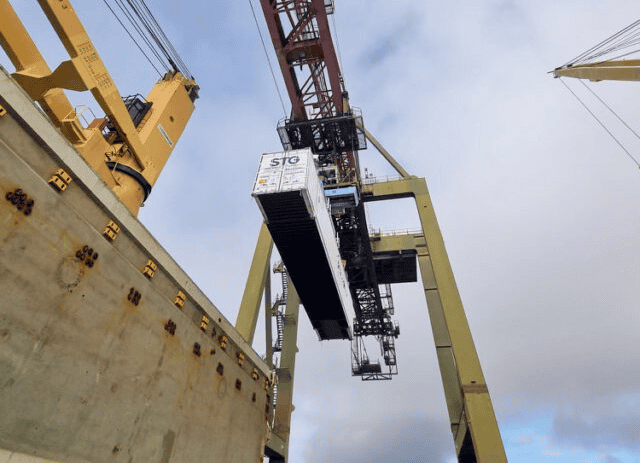
At the core of this system are marine terminals, where containers are unloaded from vessels. Rail ramps provide connections to inland transportation networks, while warehouses and distribution centers handle storage and processing.
Key infrastructure includes:
• Marine terminals for unloading containers
• Rail ramps for inland connections
• Container yards for storage
• Warehouses for distribution
Technology systems also play a critical role. Platforms supporting transportation logistics help track container locations and coordinate scheduling across facilities.
Many trucking and logistics companies integrate drayage services with broader supply chain solutions. In addition, partnerships with freight shipping companies help ensure containers move efficiently across long distances before reaching their final destination.
The implication is scalability. Strong infrastructure allows these operations to handle increasing volume while maintaining efficiency.
Benefits of Working with Drayage Companies
Drayage companies provide several advantages that make them essential for containerized freight movement. One of the most important benefits is speed, as they specialize in short-distance transport.
Key benefits include:
• Fast container movement between facilities
• Reduced congestion at ports
• Improved coordination between transportation modes
• Increased efficiency across supply chains
In practice, these benefits improve logistics performance. Timely movement reduces delays in inventory processing and distribution.
Another advantage is reliability. Experienced providers understand port systems and scheduling requirements, allowing them to operate efficiently.
The implication is improved performance. Businesses can reduce delays and maintain better control over logistics operations.
Challenges in Drayage Operations
Despite their importance, drayage companies face several operational challenges. These are often tied to congestion, equipment availability, and scheduling constraints.
Common challenges include:
• Port congestion delaying container pickup
• Limited chassis availability
• Strict terminal appointment systems
• Traffic congestion in logistics hubs
For example, high container volumes at a port can create delays that affect the entire supply chain. Drayage companies must adapt quickly to maintain efficiency.
The implication is the need for flexibility. Providers that use strong coordination and planning can manage these challenges effectively.
The Role of Drayage Companies in Modern Logistics
Drayage companies play a key role in modern logistics as supply chains rely more heavily on containerized transportation. The growth of global trade has increased the volume of containers moving through ports and rail networks.
At a strategic level, these providers enable efficient transitions between transportation modes. Without them, containers would remain at terminals, creating delays.
Organizations that rely on intermodal services and container drayage benefit from the ability to move freight seamlessly across networks. By integrating short-distance transport into broader strategies, businesses can optimize routing and reduce transit times.
The implication is strategic importance. Drayage companies are essential to maintaining efficient and competitive supply chains.
Frequently Asked Questions
What are drayage companies?
Drayage companies specialize in short-distance container transport between ports, rail terminals, and nearby facilities.
When are drayage companies used?
They are used when containers need to move between transportation hubs within the same region.
What services do drayage companies provide?
They provide container pickup, delivery, and coordination between ports, rail yards, and warehouses.
What equipment do drayage companies use?
They use trucks and chassis designed to transport shipping containers.
How do businesses choose drayage companies?
They evaluate experience, reliability, equipment availability, and port access.
Partner with STG Logistics
Efficient container movement depends on strong coordination between ports, rail networks, and distribution facilities. STG Logistics helps businesses streamline these connections and keep freight moving without delays.
If you are looking to improve container flow and strengthen your logistics strategy, contact STG Logistics to learn how their solutions can support your operations.