By Sam LaRocca, Senior Vice President, LTL Operations
As volatility reshapes global trade, carriers that prioritize network fit, pricing precision and integration – not just volume – will define the next era of LTL.
For years, supply chain leaders could plan with a level of predictability that now feels almost foreign. Freight volumes followed patterns. Costs, while fluctuating, were manageable. And visibility, while never perfect, was sufficient to guide decision-making.
That environment no longer exists.
Today, the less-than-truckload (LTL) market is operating in a state of sustained disruption, where global events, shifting trade dynamics and cost volatility are rewriting the rules in real time. And while many are searching for signs of a clean rebound, the reality is far more complex: the next phase of LTL won’t be defined by a surge in demand – it will be defined by how well carriers adapt.
Capacity Shifts Are Real
As truckload capacity tightens, more freight is naturally drifting into LTL networks, particularly in the 5,000 to 20,000-pound range. But that shift is not a blanket opportunity. Freight can’t be forced into a model where it doesn’t fit and be expected to be profitable.
This is a critical distinction. While demand migration is happening, not every carrier is positioned to capitalize on it. Network alignment – not just availability – will determine who benefits.
The Rebound Question: Cautious Optimism, Uneven Reality
After a soft start to 2026, many are asking when LTL tonnage will rebound. The honest answer: it depends.
Inventory levels, manufacturing activity and broader economic conditions will all play a role. At the same time, shifts in shipping behavior – such as a move from less-than-container load (LCL) to full container load (FCL) – are changing how freight enters the domestic network in the first place.
This uncertainty is compounded by external shocks – from geopolitical tensions to fuel market swings – that can alter demand patterns almost overnight.
Profitability Over Volume: The New Operating Mandate
In this environment, the traditional focus on volume is giving way to a sharper, more disciplined approach. It’s not just about picking up more freight. It’s about picking up the right freight in the right lanes.
That means defining and sticking to a network “sweet spot”: specific lanes, weights and freight classes that drive profitability. Carriers that chase volume outside those parameters risk eroding margins in an already volatile cost environment.
The takeaway: success in today’s LTL market requires precision. Carriers must become almost surgical in how they manage freight.
Cost Pressures Are Forcing Smarter Pricing
At the same time, rising labor and insurance costs—combined with highly volatile fuel prices—are forcing a more dynamic approach to pricing.
Fuel volatility, in particular, has become increasingly difficult to absorb, with prices capable of swinging dramatically in a matter of days. As a result, carriers are leaning more heavily on fuel surcharges and reevaluating how accessorials are structured.
The result is a shift toward more deliberate, data-informed pricing strategies – strategies that can flex with market conditions rather than react to them.
Technology Is No Longer Optional
Technology is playing a central role in enabling that shift.
From AI-driven customer service tools to predictive analytics and real-time visibility platforms, carriers are using technology to improve efficiency, reduce friction and make faster decisions. In some cases, the impact is immediate and measurable, like dramatically reducing customer service backlogs or improving response rates.
But the real differentiator isn’t just adopting technology – it’s integrating it effectively. AI is here to stay, and the only question is how you weave it into your existing structure in a way that helps you drive better decisions.
Meanwhile, top-performing carriers are going even further, leveraging dynamic pricing tools that adjust rates in real time based on network capacity and demand, ensuring trailers are optimized before they leave the terminal.
Integration Is Emerging as the True Differentiator
Beyond pricing and technology, one of the most important shifts underway is how LTL fits into the broader supply chain.
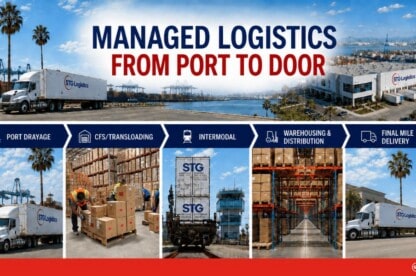
At STG, LTL is not treated as a standalone product. Instead, it’s integrated into a larger network that includes port-centric logistics, container freight stations (CFS), intermodal and final-mile delivery.
The goal: create a seamless, end-to-end solution. STG isn’t handling just one piece of the journey – we’re connecting the dots from deconsolidation to inland transport to final-mile delivery.
This integrated approach is becoming increasingly valuable in a fragmented and unpredictable environment, where customers are looking for simplicity, control and fewer handoffs.
The Bigger Reality: Constant Disruption Is the New Normal
Perhaps the most defining characteristic of today’s market is the lack of predictability itself. Before COVID, supply chain organizations could map out volumes six months in advance. That isn’t the case anymore.
From pandemics to geopolitical conflicts to shifting trade policies, disruption has become continuous instead of episodic. And because global trade underpins so much of the LTL ecosystem, those disruptions ripple quickly across domestic networks.
For customers and carriers alike, that means adapting to a new baseline: one where volatility isn’t an exception – it’s the operating environment.
Looking Ahead
There is cautious optimism that conditions may stabilize as inventory levels normalize and the market moves through the second half of the year. But few are willing to make bold predictions.
Instead, the focus is shifting toward what can be controlled: network discipline, pricing strategy, technology adoption and integration.
Because in today’s LTL market, the winners won’t be those who wait for demand to return – they’ll be the ones who are already operating with precision, flexibility and a clear understanding of where they create value.
In today’s volatile LTL market, success depends on agility, precision and the right logistics partner. STG helps customers navigate disruption with integrated solutions built for speed, visibility and control. Ready to optimize your freight strategy? Connect with STG today: https://www.stgusa.com/contact/